








.jpg?width=1976&height=1480&name=Turtl%20x%20OneAdvanced%20(1).jpg)



Marketing teams have a content problem: plenty of content activity but not enough visibility into what that activity actually means. You can see clicks, opens and visits, but translating that into something marketing automation or a CRM can use is usually slow, manual and fragmented. And when you want to personalize content at scale, the operational overhead multiplies. New forms, new logic, new templates and another round of support requests just to get things moving.
We’re fixing that with a new set of updates focused on one thing - helping you activate real behavioral data in your stack and build personalized journeys without the setup grind.
These improvements sit in two buckets: first-party intent data and personalization at scale. Combined, they give you more control, less dependency on support and a faster route to turning engagement into action
First-party intent data you can switch on yourself
First-party engagement signals are only meaningful if you can activate them quickly and feed them straight into the systems that drive scoring, segmentation and automated workflows. With our new intent data setup, you can switch everything on directly inside your CRM or MAP. Custom events, tracking and behavioral signals start flowing instantly, so you can use real reading behavior in your programs without delay.
Inside the HubSpot, Marketo and Pardot integrations, you can switch on behavioral tracking with a single toggle. The tracking code installs automatically and the system starts collecting richer behavioral signals straight away.
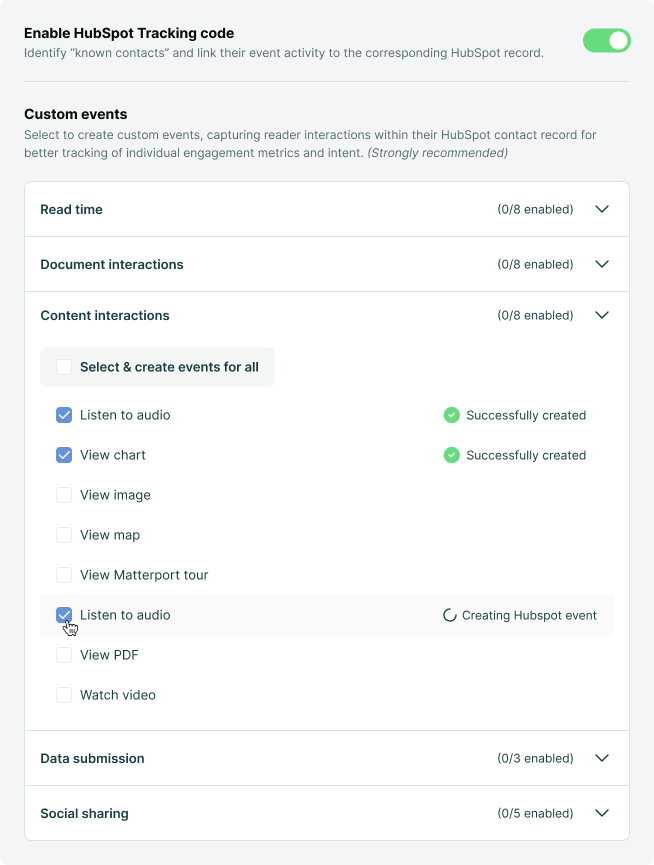
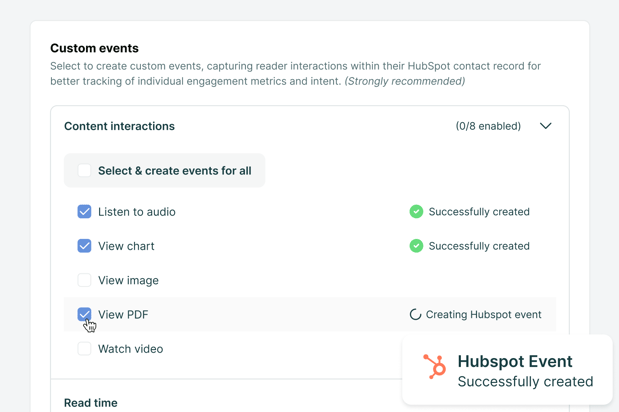
Once tracking is active, you can enable custom event delivery with one click. That includes key signals like views, completions, shares and other interactions that actually indicate intent. These events stream directly into your CRM or MAP, so they appear exactly where you need them: in scoring models, workflows, segment rules and sales activity timelines.
The end result is pretty simple. Your engagement data reaches your CRM the moment you switch it on, without waiting on anyone else. Gone are the days of cycles, reminders, and code changes. You control the timing, and it starts working right away.
This matters most for teams who rely heavily on automation. If your lead scoring model depends on more than surface-level metrics, or if you want Sales to prioritise accounts based on engagement and behavior, you now have a reliable data stream feeding those decisions without manual effort.
Identify known readers without extra forms or friction
Also added is a new capability that tackles a gap most teams don’t realise they have. Even with richer intent signals flowing into your CRM, you still miss a chunk of engagement when known contacts read content without filling a form or clicking a tracking link. That silent activity creates blind spots in scoring, attribution and handoff. To close that gap, we’ve introduced a way to identify existing contacts automatically and remove the friction that usually gets in the way.
The Passive Reader Identification enables Turtl to automatically recognize and attribute known readers from HubSpot, Marketo and Pardot without requiring form submission or LCURLs.
This enhancement strengthens lead attribution, supports deeper engagement analytics, and reduces friction for readers who have already engaged through existing marketing channels.
Benefits
- Less manual work: you don’t need to build forms or LCURLs just to track who’s reading your content.
- Cleaner attribution: your CRM gets accurate reader identity without gaps, so scoring and reporting stop relying on guesswork.
- Stronger engagement insight: you see which known contacts are actually consuming content, which helps Sales prioritise and helps Marketing target more precisely.
Personalization at scale without the operational drag
Personalization sounds great in theory. In practice, it’s a sequence of tedious tasks: building forms, aligning fields, wiring CRM systems, matching templates, checking logic, and hoping the whole thing doesn’t break the next time you launch a campaign.
Most teams don’t struggle with strategy; they struggle with setup.
This update makes setting up personalization much more manageable.
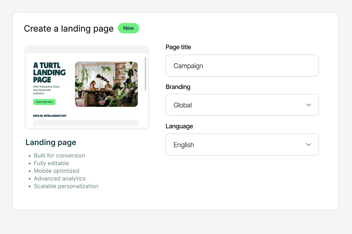
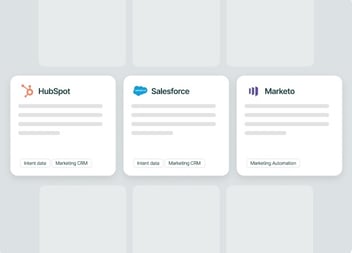
You now get CRM-ready templates for HubSpot and Marketo that remove the guesswork from building B2B personalization. You don’t have to figure out which fields map where, or how to configure forms so they don’t conflict with existing workflow logic. The templates are pre-structured, clean, and built to work out of the box.
If you use intent data providers like 6sense or Demandbase (which we recommend because combining first and third-party data gives you the most accurate view of accounts), the same principle applies. Prebuilt templates make it easier to tie personalized journeys to actual buying signals without rebuilding the whole system every time you launch a new ABM program.
Batch Personalization (that can personalize 1000s of documents in minutes) also gets new predefined paths that standardize how teams set up personalized docs. These paths handle the heavy lifting and define structure, sequence and logic so you can focus on the message instead of the mechanics.
The result is a more predictable process that saves you time, reduces the risk of errors and helps teams produce consistent, scalable personalization across campaigns without reinventing the workflow each time.
Why this matters for your team
Most platforms can capture data, and some can personalize content, but very few can do it at scale without piling on extra work. These updates remove the two bottlenecks that normally slow teams down (technical setup and operational overhead) so you can run high-volume personalized programs without the usual drag.
Here’s what changes for you:
Faster activation of real intent signals
Marketing ops teams can plug behavioral data into scoring models and workflows immediately. You don’t need to wait for support or escalate internally.
Stronger signals for demand and ABM programs
Demand gen and ABM teams get a reliable flow of first-party engagement data that helps identify who is reading, what they’re reading and how ready they are to advance.
Personalized journeys without starting from scratch
Templates and predefined paths eliminate repetitive work, speed up campaign deployment and make accessible to more people in your team.
Better consistency across channels and teams
Standardized templates keep everything aligned. You avoid the inconsistencies that creep in when every campaign owner builds their own version of a personalized journey.
Reduced dependency on technical resources
You no longer need to rely on developers or CSMs to switch on tracking or configure event delivery. Your team owns the workflow end-to-end.
Less friction, more impact
With less time spent on setup, you can move focus back where it actually matters: improving targeting, shaping experiences and driving revenue.
A more connected, more actionable Turtl
The common thread across these updates is control. You get more of it, and you get it without needing to expand your team, open support tickets or slow down your campaigns. Turtl becomes easier to plug into your CRM and MAP, faster to activate and more useful as a source of first-party intent.
If you rely on behavioral signals to power scoring, qualification, automated journeys or ABM workflows, these updates give you clearer data, quicker activation and a far smoother operational path.
We’ll share more details as we get closer to rollout, but the core message is straightforward: you can soon turn intent into action with far less effort.
FAQs
What is first-party intent data in Turtl?
It’s behavioral data captured directly from how people read and interact with your content. Turtl sends signals like views, completions and shares straight into your CRM or MAP.
How does Passive Reader Identification work?
Turtl automatically recognizes known contacts from HubSpot, Marketo or Pardot without needing forms or LCURLs. It matches existing CRM profiles to reading sessions to close attribution gaps.
Do I need developers to enable tracking?
No. Behavioral tracking and custom events can be switched on from inside your CRM or MAP within Turtl with a single toggle. No code changes or support tickets required.
What custom events can I send to my CRM?
You can deliver events such as content views, page completions, shares and key interactions. These feed into scoring, workflows, segments and sales timelines.
How do the personalization templates help?
They remove the setup work. Each template has pre-mapped fields and clean form structures, so you can launch personalized content without rebuilding logic every time.
Can I use 6sense or Demandbase with these updates?
Yes. Prebuilt templates help you combine first-party Turtl data with third-party intent signals to build more accurate ABM journeys.
Does Batch Personalization support large campaigns?
Yes. It can generate thousands of personalized documents in minutes, now with predefined paths that standardize structure and reduce errors.
Who benefits most from these updates?
Marketing ops, demand gen, ABM teams and anyone relying on scoring, workflows or personalized journeys. You get cleaner data, faster activation and less operational overhead.
Will this affect existing integrations?
No. Existing HubSpot, Marketo and Pardot setups continue working. You simply gain additional capabilities you can activate when ready.