








.jpg?width=1976&height=1480&name=Turtl%20x%20OneAdvanced%20(1).jpg)





Contents
- Why this matters
- What you can expect from the Integrations Hub
- Why this is important for you
- Ready for more?
- Frequently Asked Questions
Head of Product Marketing and AI GTM @ Turtl, Award-Winning PMM and globally recognized PMM leader. Author of the best-selling book "The Product Momentum Gap.”
See Turtl for yourself
Integrations are critical to getting the most from your tech stack. They connect systems, streamline workflows, and break down data siloes. But when integrations are hard to find, understand, or configure, their potential goes untapped.
Until now, discovering Turtl’s integrations has meant digging through support articles or relying on word of mouth. That ends today.
We’re proud to introduce the Turtl Integrations Hub, your one-stop shop for all available integrations. With its clean, accessible UI, the Hub is designed to improve visibility, usability, and connection to revenue data – making it easier than ever to extend the value of the Turtl platform.
Why this matters
In B2B, no two teams work the same way. Every business has its own tools, processes, and systems that drive revenue. Integrations are how Turtl plugs into that ecosystem, activating workflows, syncing data, and making sure your content efforts are tied to real business outcomes.
With a centralized, intuitive interface, the Turtl Integrations Hub lets teams explore and configure integrations – all within the platform. Whether it’s connecting CRM data, automating reporting, or streamlining lead management, Turtl works hand-in-hand with your existing stack to help show and grow revenue.
This update pushes forward a key focus for us: helping customers connect revenue data to content performance. By linking real revenue figures to your analytics, you move beyond engagement metrics and get undisputable evidence of how your content contributes to pipeline, conversion, and growth.
What you can expect from the Integrations Hub
- A centralized integrations UI
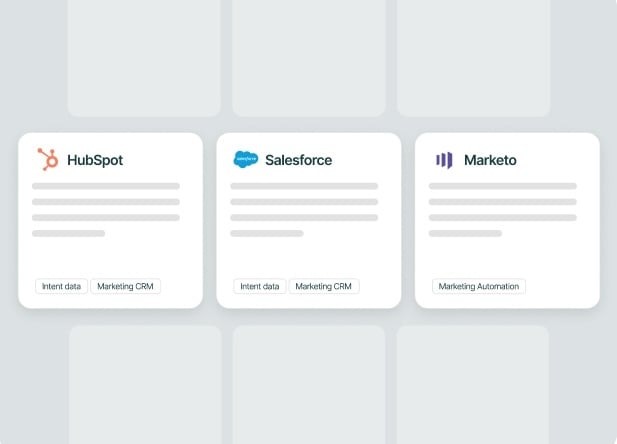
All available integrations are displayed in a clear, grid-style layout. No more searching through help documentation or guessing what’s available. - Detailed integration descriptions
Each integration has a dedicated page with clear explanations of what it does, how it adds value, and simple setup instructions. - Self-serve HubSpot revenue integration
HubSpot users can now configure revenue settings directly within the integration interface. Once connected, your Revenue Analytics dashboard will automatically display real revenue data. - Support for manual revenue data upload
For non-HubSpot CRM users, uploading CSV files is still a simple alternative to connect revenue data to analytics. -
Ability to change currency to reflect global markets
To support international teams, the Integrations Hub includes the ability to switch currency views — giving you clearer context around performance across all your global regions.
-
Simplified personalization form creation
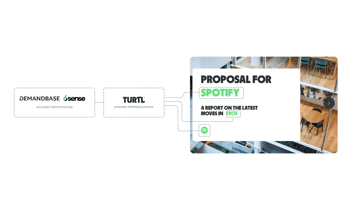
The release of the Integrations Hub also simplifies personalization form creation with CRM-ready templates (HubSpot, Marketo) and intent provider templates (6sense, Demandbase), along with predefined paths in batch personalization. This reduces setup effort and improves discoverability
This is only the beginning. We’ve got more revenue data integrations coming soon that’ll make it even quicker and easier to prove content’s revenue impact.
Why this is important for you
By bringing everything together in one place, we’re helping you connect Turtl to the systems you already use, so you can focus on driving revenue – not managing tech stack complexity and chasing scattered data.
For existing customers, the Integrations Hub makes it easier to connect Turtl with your revenue workflows. By simplifying how you access and activate integrations, you can quickly link content performance to real business impact, without extra tools or workarounds.
For new users evaluating Turtl, the Hub offers a clear view of how we integrate into your wider marketing and sales stack. It shows how Turtl connects content engagement to pipeline, conversion, and revenue – and how that creates more value from your existing systems.
For admins and marketing operations teams, this becomes your single, reliable source of truth for Turtl integrations. Setup is straightforward, data connections are clearer, and managing revenue analytics is easier. No more jumping between platforms or relying on manual processes.
Ready for more?
We know how frustrating it can be to juggle disconnected tools, messy data, and constant pressure to prove the impact of your work. Content teams, marketers, and ops leaders shouldn’t have to fight their tech stack just to get a clear view of what’s working.
With the new Integrations Hub, connecting your content efforts to real business results becomes easier and faster. You’ll spend less time navigating tech hurdles, and more time doing the work that actually grows your pipeline and drives revenue.
Frequently Asked Questions
How does the Turtl Integrations Hub help ABM teams run personalized campaigns?
The Integrations Hub simplifies how ABM teams connect Turtl to the data sources their programs run on. CRM-ready personalization templates for HubSpot and Marketo let teams set up data-driven content personalization without manual field mapping. Intent provider templates for 6sense and Demandbase connect account intelligence directly to the personalization workflow, so content adapts to account stage, industry, and buying group signals automatically. For teams running campaigns across large target account lists, the Hub reduces setup time and puts the full personalization workflow inside a single interface.
Which ABM and intent data platforms does Turtl integrate with?
Turtl integrates with 6sense and Demandbase for ABM and intent data, with pre-configured templates available directly in the Integrations Hub. These templates connect account intelligence from your intent platform to Turtl's personalization engine, so content adapts based on account stage and in-market signals. CRM integrations with HubSpot, Marketo, Salesforce, and Pardot provide the account profile data that powers personalization variables including company name, industry, product fit, and buying stage. All available integrations are now visible and configurable in one place.
Can I use AI to personalize ABM content at scale through Turtl's integrations?
Yes. Turtl's AI assistant, Hatch, works with the data Turtl's integrations bring in. Once your CRM or intent platform is connected through the Integrations Hub, Hatch can generate and adapt content based on account-level data including industry, buying stage, and persona. The result is AI-assisted personalization at scale: Hatch helps you with content generation, the integration handles the data feed, and your team handles strategy and approval. You scale personalized content across your full target account list without scaling headcount.
How does Turtl's HubSpot integration connect ABM content to revenue data?
Turtl's HubSpot integration, now configurable self-serve through the Integrations Hub, connects content engagement data to CRM contact and opportunity records. Engagement activity syncs directly to HubSpot, feeding the workflows, lead scoring, and pipeline reporting your demand gen team already runs. The revenue integration goes further: once connected, your Revenue Analytics dashboard in Turtl pulls actual revenue figures from HubSpot, so content performance is measured against pipeline and closed revenue. ABM teams see which assets moved which accounts, tied to real deal data rather than engagement proxies.
How does batch personalization work with Turtl's CRM integrations?
Batch personalization lets ABM teams generate account-specific content versions at scale using CRM data. You build one base asset, define personalization variables, and connect it to your CRM through the Integrations Hub. Turtl generates a unique, personalized version for each account on your list automatically, with predefined paths in the workflow that reduce setup to a few steps. Each version gets its own tracked URL, and engagement data from every version flows back into your CRM and ABM platforms as contact-level intent signals. One asset becomes the content foundation for your entire target account list.
How does the Integrations Hub simplify personalization setup for marketing operations teams?
The Hub centralizes every integration Turtl supports in one interface, with a dedicated page for each connection that includes setup instructions and a clear explanation of what the integration enables. Personalization form creation, previously a multi-step configuration exercise, now uses CRM-ready templates for HubSpot and Marketo and intent provider templates for 6sense and Demandbase. Marketing operations teams configure integrations and manage revenue settings without leaving the platform, making the full personalization workflow self-serve and reducing the setup effort for every new campaign.