









.jpg?width=1976&height=1480&name=Turtl%20x%20OneAdvanced%20(1).jpg)




10 BEST B2B MARKETING EXAMPLES & CAMPAIGNS (OF ALL TIME)
Jun 28, 2026

Contents
- What is a B2B product example?
- What is a B2B campaign?
- What are the key types of B2B marketing campaigns?
- What makes a successful B2B marketing campaign?
- What is the rule of 7 in B2B?
- 1. Spotify – Wrapped for Advertisers
- 2. Upwork – Hey World
- 3. Slack – “So yeah, we tried Slack”
- 4. General Electric – What matters
- 5. Airbnb – Become a host
- 6. Canva – Canva Create
- 7. Mailchimp + VICE Media – Second Act
- 8. HubSpot – "The Growth Show"
- 9. LinkedIn – "In it together"
- 10. Turtl – "ABM 2030"
- What are the best practices for creating a high-performing B2B campaign?
- How can data and analytics help prove B2B campaign ROI?
- How can personalization improve B2B campaign performance?
- What makes a B2B ABM campaign different from a standard campaign?
- Frequently asked questions
- Turtl takeaway
See Turtl for yourself
Great marketing campaign ideas are rare. Great B2B marketing campaigns are even rarer.
And when every marketing penny spent has to tie back to revenue growth, how do you make sure campaigns delight audiences and prove their ROI? Advertising plays a crucial role in B2B campaigns, where creativity and analytics combine to deliver targeted, impactful messaging.
These 10 B2B marketing campaigns nailed exactly that. Read on to see B2B marketing genius in action and get practical advice for engaging, effective campaigns.
What is a B2B product example?
First things first, let's start with the basics.
If you’re wondering “What is a B2B product example?”, here’s the short version: it’s any product or service sold from one business to another to help them operate, grow, or serve their own customers. Think wholesaler goods, raw materials, or industrial equipment that keeps supply chains moving. Or digital tools – like Software as a Service (SaaS) platforms, analytics tools, or CRM systems – that power everything from sales to marketing. Even everyday office supplies count.
In short: if it helps another business do its job better, faster, or smarter — it’s a B2B product.
What is a B2B campaign?
A B2B (business-to-business) campaign is a marketing sequence delivered from a company to other businesses that promote a singular idea/theme throughout all communications. Some campaigns are solely focused on building brand image, awareness, and/or loyalty while others are designed to drive a particular action e.g. buying a product/service, renewing a contract, etc.
Campaigns are made up of assets that range from traditional billboards to digital paid ads. Wondering what is an example of a B2B paid ad? Think of LinkedIn Sponsored Content promoting a new whitepaper, or Google Ads driving traffic to a SaaS product trial. These paid ads appear alongside other campaign content – videos, social posts, articles – and rely on bidding systems or paid placements to reach high-value decision-makers. In short: you pay to play, but the payoff is precision targeting and measurable ROI.
While B2C campaigns are designed to target individual consumers, B2B campaigns focus on engaging other businesses and decision-makers within those organizations.
What is the 95/5 rule in B2B marketing and why does it matter for campaigns?
The 95/5 Rule is a game-changer in B2B marketing. It says that at any given time, only 5% of your target market is actively looking to buy – the other 95% are “out-of-market”, not ready to purchase (yet).
That 95% still matters – a lot. They’re your future pipeline. The brands that win long-term are the ones investing in awareness, trust, and emotional connection before buyers ever raise their hand.
In short: if you only market to the 5% who are ready now, you’ll starve future growth. Smart B2B campaigns balance short-term demand capture with long-term brand building because today’s browsers are tomorrow’s buyers.
What are the key types of B2B marketing campaigns?
Before diving into the examples, let’s break down the different types of B2B marketing campaigns. Understanding the type you’re working with can help you tailor your approach for maximum impact.
- Brand awareness campaigns: These campaigns aim to increase recognition of your brand and ensure it’s top of mind for your audience.
- Lead generation campaigns: These focus on attracting potential customers and turning them into leads through various tactics like content marketing, webinars, and events. Often, a dedicated landing page is used to guide users through the process and increase conversions.
- Product launch campaigns: When introducing a new product or service, these campaigns build excitement and drive initial sales by showcasing offerings and their value to your target market.
- Customer retention campaigns: Keeping all your existing customers, whether they're small businesses or global enterprises, engaged and loyal is the goal here, often through personalized communication and loyalty programs.
- Account-based marketing (ABM) campaigns: Highly targeted campaigns aimed at specific high-value accounts, focusing on building relationships with key decision-makers.
- Content marketing campaigns: Creating and distributing relevant content that attracts, engages, and converts your target audience. These can even include live demos to engage prospects and customers.
- Event marketing campaigns: Leveraging events – in-person or virtual – to connect with your audience and drive business outcomes.
- Social media marketing campaigns: An organized effort on platforms like LinkedIn and YouTube to promote brand awareness, recruitment, and community engagement, helping to expand your audience and showcase company culture. Paid social can amplify these efforts to reach even more people.
What makes a successful B2B marketing campaign?
A high-performing B2B campaign isn’t built on luck. It’s built on knowing exactly who you’re talking to and why they should care.
Start with deep audience insight. Understand what motivates your buyers, what slows them down, and what they actually need from you. When your messaging speaks their language, you stop shouting into the void and start sparking interest.
Next comes content strategy with intent. Every campaign asset should earn its place, solving real problems, answering real questions, and positioning your brand as a trusted expert. Then take it multi-channel. Meet your audience where they already are – whether that’s their inbox, LinkedIn feed, or favorite podcast — and keep your story consistent across every touchpoint.
The best B2B campaigns don’t just capture attention; they hold it. They deliver value, build credibility, and create relationships that outlast the campaign window. Know your audience. Show up smart. Delivering something worth engaging with is how modern marketers win.
What role does storytelling play in effective B2B campaigns?
Storytelling is how B2B breaks out of boring.
A good story translates product features into human outcomes. It turns your brand from a supplier into a character your audience roots for. If people remember your narrative, they’ll remember your name when the budget lands on their desk.
How can visuals and design enhance B2B marketing campaigns?
Visuals are your first impression – and your fastest converter. In a world of doom-scrolling and inbox fatigue, a striking image or dynamic layout earns the pause copy sometimes can’t.
Strong design isn’t vanity; it’s velocity. It gets your message seen, felt, and remembered.
What is the rule of 7 in B2B?
The Rule of 7 in B2B marketing says that a potential buyer needs to see your message at least seven times before they’re ready to act. Sounds repetitive? That’s the point.
In crowded markets, one ad or email won’t cut it. Repetition builds recognition – and recognition builds trust. Whether it’s a podcast mention, a LinkedIn post, a case study, or a retargeting ad, every touchpoint moves your audience one step closer to saying yes.
The takeaway: don’t just show up once and hope for magic. Stay visible, stay consistent, and make each interaction count. That's where next-level campaigns like the ones below come in.
What are the best B2B marketing campaigns of recent years?
1. Spotify – Wrapped for Advertisers
Every Spotify user knows about Wrapped. Getting over a million views from its early days, the streaming service’s highly personalized, highly sharable, snackable B2C campaign has been running every November since 2015, creating more and more organic publicity each year. So to answer “What makes a successful B2B marketing campaign?” Spotify looked at what rang true with their customer base.
Wrapped for Advertisers takes data that consumers love to see about themselves, and offers businesses access to these extraordinary insights into people’s music preferences. This was a great example of how to connect data to human experience.
What makes this B2B marketing campaign work?
-
Associates their B2B product with a familiar B2C campaign
-
Showcases statistics to enhance claims
-
Features social proof, with testimonials and positive reviews
-
Maintains brand tone of voice
-
Reveals seasonal and demographic consumer trends and behaviors
Takeaway B2B marketing idea: Use behavioral data to drive performance
Spotify knows that audience insights are the major selling point of this B2B marketing campaign. Capturing audience insights to enhance strategy is a driving feature of the best B2B marketing campaigns.
Having access to behavioral data allows you to improve campaigns and communications continually, and this applies to much more than adverts. You should analyze every element of your marketing campaigns to identify what works and what needs improvement.
2. Upwork – Hey World
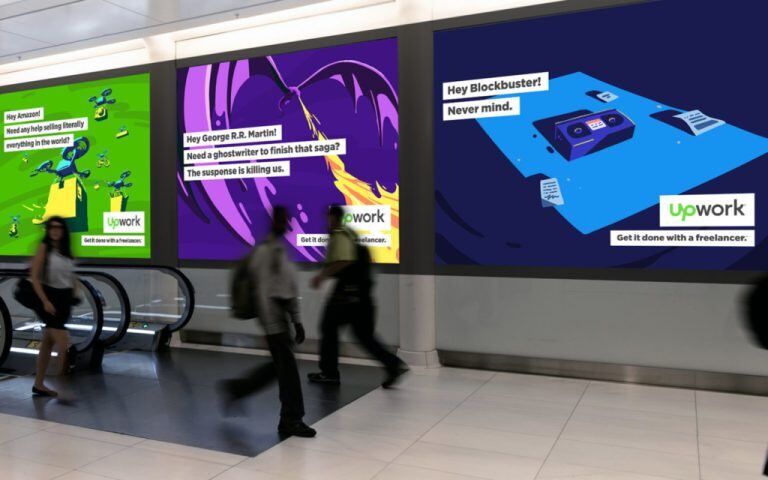
Upwork, a marketplace for freelancers to showcase their work and connect with clients, dared to do the impossible and combine personalization and mass reach.
The campaign included a series of short animated videos and rented eye-catching out-of-home assets like billboards, which name-dropped high-profile individuals (like George R R Martin) and household names (like Amazon).
The campaign capitalized on the power of personalization – particularly scalable personalization. It didn’t just use names to catch audience members’ eyes but also ensured their ad copy remained relevant to the name or business attached.
Effective personalization means tailoring content to the unique needs of one business, recognizing that what works for one may not work for another.
Turtl calls this psychological marketing technique deep personalization. This approach goes further than just adding first names, instead tailoring content even further – and getting enhanced content results for marketing teams in the process.
What makes this B2B marketing campaign work?
-
Personalized campaign
-
Scaled assets to maximize outreach
-
Eyecatching designs
-
Pushes the boundaries of traditional B2B campaign content
Takeaway B2B marketing idea: Personalize for results that connect
Personalization isn’t a new concept for marketers. But it isn’t always easy, even though many of the better B2B marketing campaigns are predominantly digital. Unless you’re thinking outside the box as Upwork did, it pays to make sure your B2B marketing platform is capable of simple, scalable personalization.
3. Slack – “So yeah, we tried Slack”
Riding the coattails of popular sitcoms like The Office and Parks and Recreation, Slack created this funny, mockumentary-style video ad to show exactly why they’re better than the other workplace communication apps that shape our professional lives.
The video follows the company Sandwich Video, a real Slack customer, as they introduce Slack to their office. The result is a testimonial-packed case study and a genuinely entertaining piece of media.
What makes this B2B marketing campaign work?
-
A humorous approach to their B2B marketing campaign
-
Packed with information relevant to their audience
-
Targets audience pain points
-
Ingenious case study content
-
Slack knows how to align B2B content marketing with its core mission
Takeaway B2B marketing idea: You’re allowed to be fun
Injecting fun into your B2B marketing campaign is no bad thing. Studies have found humor in marketing builds persuasion and influences a positive brand experience.
More and more businesses are attempting to make their B2B adverts entertaining, but Slack found the perfect balance and even managed to squeeze a long list of integrations into their advert.
The comms your business produces play a big role in establishing your reputation and as Slack’s video points out, can impact internal company culture too.
4. General Electric – What matters
One thing many B2B companies struggle with is getting audiences to care. Whether the product or service they sell is widely used or an everyday tool, audiences usually don’t get beyond “What’s in it for me.”
So, GE played up to this. They created an ad that uses short but powerfully told stories demonstrating how GE uses technology to improve people’s lives. The resulting ads build brand affinity and evoke emotion by focusing on community engagement and storytelling that made complex technologies relatable for a broad audience.
What makes this B2B marketing campaign work?
-
Superb brand storytelling
-
Humanizes the brand’s mission
-
Awareness of reputation
-
Use of statistics
Takeaway B2B marketing idea: Emotions are important
Responding to stories is something we all do instinctively as humans. Well-structured, well-told stories connect storytellers and audiences, triggering chemical reactions that influence preferences and choices.
B2B marketers can capitalize on this by creating marketing collateral that plays into the fact that B2B decisions are emotional.
Marketers who use storytelling can choose a platform for interactive long-form content that captures attention, drives engagement, and provides first-party intent data.
5. Airbnb – Become a host

Airbnb understands that the businesses they are marketing to are unconventional. The audience they’re trying to engage might not even be considered businesses by some – they’re homeowners! But if this dive into the best B2B marketing campaign examples has taught us anything, it’s that non-conformism is often the key to success.
In its campaign to turn homes into businesses, Airbnb keeps its messaging simple. They understand this particular decision is a personal one. This B2B marketing campaign speaks to these psychological drivers, appealing to hearts before minds, leading with visuals, and keeping copy light.
The image-first approach captures attention quickly and encourages those curious enough to find out more for themselves. Statistics, details, and compelling arguments are reserved for content that supports the main campaign.
What makes this B2B marketing campaign work?
-
Visual first format
-
Target personal pain points
-
Focus on story-led benefits for their audience
-
Encourages exploration of more detail
Takeaway B2B marketing idea: Focus on your visuals
The best B2B campaign ideas don’t try to do too much, too fast. Remember that your top-of-funnel content doesn’t have to contain your whole pitch – it just needs to create intrigue and make your audience want to find out more.
Creating intrigue is something that imagery is perfectly suited to, especially when balanced with the right copy. For campaigns beyond the world of bespoke ads, visually focused content will grab your audience’s attention.
6. Canva – Canva Create
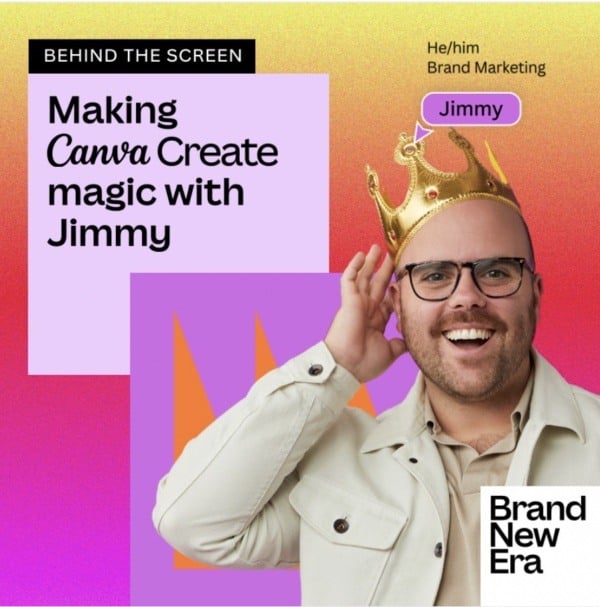
Launched to encourage people into the tool and encourage them to share their designs, a million people signed up for the inaugural launch of Canva Create. A staggering 5 million people were actively involved in the campaign at its peak.
According to Canva (and Google Gemini), the #CanvaCreate hashtag has been used over 100 million times by participants. Canva's campaign content has achieved over a million views, demonstrating its significant reach and engagement, with some videos surpassing a million views and highlighting the campaign's popularity.
What makes this B2B marketing campaign work?
-
User-generated content at its finest
-
Gets people into the tool, fast
-
Directed at an audience who love sharing across socials
Takeaway B2B marketing idea: Cohesive content marketing that maxes momentum
Having built up steam with their target audience, the campaign used its momentum to announce a batch of product updates. A glitzy live online reveal hosted by CEO Melanie Perkins kicked off a content marketing plan that showcased Canva’s latest releases with flamboyant socials, great copy, and a well-oiled hashtag.
Today’s most influential kind of marketing lies in the hands of the user. User-generated content pulls psychological triggers building trust, advocacy, FOMO, desire – the list goes on.
7. Mailchimp + VICE Media – Second Act
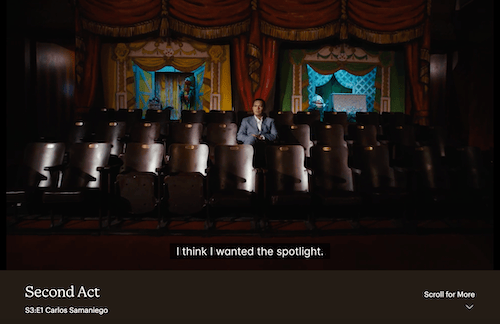
This video campaign forms part of Mailchimp Presents which focuses on humanizing the brand with storytelling. A musician takes the starring role, narrating his dreams and aspirations and how he overcame the struggle to come out, through discovering a welcoming LGBTQ+ community rooted in music. The campaign resonates with audiences by exploring the emotional connections between their professional lives and personal aspirations.
What makes this B2B marketing campaign work?
-
Powerful human-centric storytelling
-
Aligns the brands with societal awareness
-
A feel-good factor of 10/10
Takeaway B2B marketing idea: Humanizing content from a brand that’s not afraid to experiment
Mailchimp Presents features films, documentaries, and podcasts about everything from making noodles to inspiring stories about people. The brand’s willingness to try unexpected content and partner with players like Vice Media (known for its edgy publishing) pays off. Most B2B marketers stick to tried and tested campaign formulas but often, developing ideas that nobody else dares is precisely what wins.
By capturing relatable human struggles and triumphs, each story’s hero pulls us into the narrative – and closer to the brands. Partnerships mean resources are split between brands for better results and reach.
8. HubSpot – "The Growth Show"
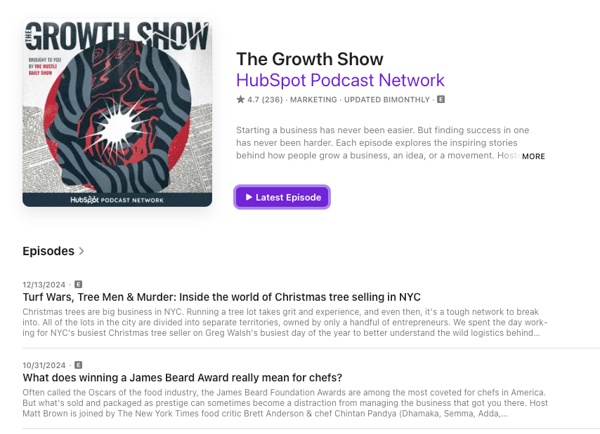
HubSpot’s “The Growth Show” is a podcast series that highlights stories of successful entrepreneurs and businesses. By featuring in-depth interviews with industry leaders and innovators, HubSpot highlights its expertise in marketing and growth while also providing valuable insights to its audience.
By sharing expert insights and industry trends, the podcast establishes HubSpot's thought leadership in the marketing space.
What makes this B2B marketing campaign work?
-
Provides valuable, educational content
-
Features Vice President-level and high-profile guests and industry leaders
-
Positions HubSpot as a thought leader in the marketing space
-
Creates an engaging format that fosters loyalty
Takeaway B2B marketing idea: Position your brand as a thought leader
A well-executed content series, like a podcast or blog, can build your brand’s authority and engage your audience with meaningful insights. By focusing on providing value and showcasing industry expertise, you can attract and retain a loyal following. And don't forget to promote it across multiple touchpoints to help get it front of as many eyes as you can.
9. LinkedIn – "In it together"
LinkedIn’s “In It Together” campaign was launched across social channels promote the platform’s role in supporting business communities during challenging times.The campaign strategically engages its audience through multiple touchpoints, including video, social media, and online ads, to maximize reach and impact.
The campaign featured a series of inspiring video stories, social media posts, and online ads that showcased how LinkedIn members and companies collaborated and supported each other through various challenges. It highlighted real-life examples of professional resilience and mutual support facilitated by LinkedIn’s network.
What makes this B2B marketing campaign work?
-
Authentic storytelling
-
Emotional connection
-
Multichannel approach
-
Reinforces brand values
Takeaway B2B marketing idea: Leverage authentic stories to highlight your brand’s impact and values
Using real-life stories and experiences helps to build an emotional connection with your audience. By showcasing how your platform or product supports and empowers users, you can effectively communicate your brand’s values and impact. A multichannel approach ensures that your message reaches a wide audience, reinforcing your brand’s commitment to supporting its community.
10. Turtl – "ABM 2030"
Click to read ABM 2030
Takeaway B2B marketing idea:
We can only imagine your horror that we've included ourselves on the list of best B2B marketing campaigns.
The audacity! The arrogance! The accuracy?!
While we're fully aware self-praise is no praise (the words of Lord Byron, who – in our humble opinion – should have backed himself more), we're not bigging ourselves up for no reason here. This campaign went down a storm. We're talking over half-a-mill-of-pipeline-generated-in-just-two-quarters-type of storm.
Distributed across email, socials, website, webinars, ads, and in-person activations, ABM 2030 guided our audience through the tornado that is modern ABM and helped them start building the road to a brighter future, brick by yellow brick.
The campaign tapped into a persistent, urgent, recognised problem facing B2B marketers on the hook for revenue: they need to drive commercial results. In an extremely competitive ABM landscape. With tactics as old and dusty as a first-edition Wizard of Oz.
So we gave them exactly what they needed to do that. No heel-clicking and hopeful wishing needed.
What makes this B2B marketing campaign work?
-
Tone, visuals, and message stood out in a sea of B2B sameness. When others zigged, we well and truly zagged.
-
Delivered real value for our audience through insights and actionable takeaways
-
Cohesive cross-channel campaign assets
-
Backed up and advanced our positioning
Takeaway B2B marketing idea:
Ironclad insight + bold creative = knockout campaigns
Get to the crux of what's keeping your target audience up at night and build a campaign looks, feels, and sounds different from everything else in the market around that. One hero piece should anchor your campaign but every subsequent asset needs to reinforce the campaign as a whole. All (yellow brick) roads should lead back to the same POV and message.
The worst thing you can do is launch something without a backbone. Do this and nobody will bat an eye at the campaign you poured time, energy, and sanity into.
Don't be afraid to stand out, to say something different. Your pipeline will thank you for it.
What are the best practices for creating a high-performing B2B campaign?
Let’s wrap up – here are some best practices to help you craft a successful B2B marketing campaign:
-
Know your audience: Understanding your target audience is your top priority. Tailor your messaging and content to address their specific needs and pain points.
-
Personalize your content: Go beyond surface-level personalization by delivering content that resonates with your audience on a deeper level.
-
Keep it visual: Visual content grabs attention and can convey your message quickly and effectively. Use compelling visuals to enhance your campaign.
-
Tell a story: A good story can create an emotional connection with your audience, making your campaign more memorable and impactful.
-
Leverage social proof: Testimonials, case studies, and reviews can build trust and credibility with your audience.
-
Measure and optimize: Continuously monitor your campaign’s performance and make adjustments as needed to improve results and make your next campaign even more successful.
How can data and analytics help prove B2B campaign ROI?
Data is your best friend when it comes to showing the impact of your efforts.
If you want to prove your campaign worked, stop counting clicks and start connecting dots.
ROI in B2B lives at the intersection of engagement data, pipeline data, and revenue attribution.
Here’s how to make it airtight:
-
Track content engagement, not just traffic.
-
Measure how long people spend, what they interact with, and how deep they scroll.
-
Platforms like Turtl track dwell time and section-level engagement, turning content into measurable buyer intent signals.
-
-
Link behavior to pipeline.
-
Feed engagement data into your CRM or marketing automation system.
-
Identify which assets are influencing real opportunities, not just form fills.
-
-
Use attribution modeling wisely.
-
Forget “last touch wins.” Combine first-touch, multi-touch, and weighted models to see which campaigns actually accelerate deals.
-
-
Close the loop with revenue data.
-
Pull closed-won data back into your analytics.
-
Learn which campaigns consistently show up in high-value journeys and scale those.
-
-
Tell the story behind the numbers.
-
Dashboards show performance. Narratives show impact.
-
Your exec team doesn’t care about CTRs; they care about how marketing moved money.
-
When marketers blend creative storytelling with hard data, something magical happens: the CFO finally nods.
How can B2B marketers use behavioral data to improve campaign performance?
Behavioral data turns guesswork into growth. By tracking how buyers actually interact – what they read, skip, or share – marketers can see which messages land and which flop. Feed those insights into your CRM or marketing strategy, and you’ll refine targeting, personalize content, and prioritize leads based on real intent. In short: stop assuming, start adapting. The data’s already telling you what works – if you’re careful to listen.
How can personalization improve B2B campaign performance?
Personalization makes B2B campaigns feel relevant by adapting what someone sees, learns, or clicks based on their behavior, industry, or buying stage.
Here’s the difference it makes:
-
Higher engagement: People spend longer on content that reflects their world.
-
Faster conversions: Tailored messaging helps buyers connect dots faster.
-
Better data: Every interaction feeds insight back into your next campaign.
The magic happens when personalization scales. That’s where tools like Turtl's Personalization Engine come in, helping marketers build customized, data-driven content without losing sanity (or design hours).
What makes a B2B ABM campaign different from a standard campaign?
Account-based marketing (ABM) campaigns flip the traditional marketing funnel. Instead of casting a wide net and filtering leads, ABM starts with a defined list of target accounts and builds campaigns around each one.
The difference matters in practice. A brand awareness campaign aims at everyone who might care about your product. An ABM campaign aims at the specific companies you have already decided you want as customers. Every asset, message, and touchpoint is shaped around the account's industry, size, challenges, and buying stage.
That precision makes ABM campaigns more resource-intensive than broadcast campaigns. The payoff is higher conversion rates, shorter sales cycles, and tighter alignment between marketing and sales, because both teams are working the same account list.
The best ABM campaigns combine outbound signals (intent data, ad exposure, direct outreach) with inbound content that's tailored enough to feel personal. The result is a campaign that doesn't just reach the account — it resonates with the specific people inside it who control the decision.

ABM campaign strategies by tier
ABM programs organize target accounts into three tiers, each with a different level of investment and customization. The tier system lets you run ABM across your full target account list without building everything from scratch for every company.
Tier 1: One-to-one (1:1)
The highest-investment tier. These are your most strategic accounts — the companies where a single win changes the quarter. Campaigns at this tier are fully bespoke: custom microsites or landing pages, personalized content for every stakeholder in the buying committee, direct mail, executive outreach, and events built around a single company's context.
The trade-off is scale. A well-resourced team can run 1:1 ABM for 5 to 20 accounts simultaneously, not hundreds.
Tier 2: One-to-few (1:few)
The mid-tier. You group 5 to 15 accounts by shared characteristics — same vertical, same buying challenge, similar deal size — and build campaigns that feel tailored without being entirely bespoke. A financial services case study, a webinar for procurement teams in manufacturing, a personalized deck that swaps in the account's industry context. The content is built for the segment, not the individual account, but it reads as relevant rather than generic.
Tier 2 scales better than Tier 1 while keeping the relevance that makes ABM work. It is where most ABM programs generate the highest return on campaign investment.
Tier 3: One-to-many (1:many)
The highest-scale tier. Hundreds or thousands of target accounts, organized by broad segment. The campaign mechanics look closer to demand generation — LinkedIn ABM audiences, intent-based retargeting, programmatic display — but with account-level targeting and measurement built in.
The differentiator from standard demand gen is how you measure. At Tier 3, you track pipeline influence by account, not by lead. A contact who reads a piece of content doesn't count as a win; an account that moves from unaware to engaged does.
Choosing the right tier mix
Most ABM programs run all three tiers at the same time, matching investment level to account potential. A workable starting split: Tier 1 gets full bespoke treatment for your top 10 to 15 strategic accounts; Tier 2 gets segment-specific campaigns across your next 50 to 100 accounts; Tier 3 gets always-on programmatic coverage for the rest of your target account list.
The goal is not to run expensive ABM for every account. It is to match investment to opportunity size. Platforms like Turtl's Personalization Engine make Tier 2 and Tier 3 personalization feasible at scale, generating customized content versions from a single master asset across hundreds of accounts without duplicating production effort.
Frequently asked questions
What is the difference between ABM campaigns and demand generation?
ABM campaigns target a defined list of specific companies with messaging built around each account's industry, buying stage, and buying committee. Demand generation campaigns reach broad audiences and qualify leads as they respond. The key distinction is sequencing: demand generation selects accounts after the campaign runs; ABM selects them before. For enterprise deals, ABM generates higher-quality pipeline because marketing and sales are aligned on the same account list from day one.
How do you choose the right ABM tier for each target account?
Match the tier to the account's revenue potential. Tier 1 is for accounts where a single win changes the quarter — bespoke content, executive outreach, and account-specific experiences for 5 to 20 accounts at a time. Tier 2 groups accounts by shared vertical or buying challenge and builds campaigns tailored to the segment. Tier 3 covers the broader target list with programmatic and paid channels, measured at the account level. A useful rule: if the deal size justifies more than two hours of custom production, the account belongs in Tier 1 or 2.
What content formats perform best in ABM campaigns?
Personalized long-form content performs best — account-specific reports, tailored proposals, and case studies featuring peer companies in the same industry. Interactive formats that capture behavioral signals (which sections of a document the buying committee read, how long they spent on each page) give sales teams a richer picture of account intent than static PDFs. Turtl's Personalization Engine generates customized content versions from a single master asset, making Tier 2 and Tier 3 personalization feasible at scale without proportional production overhead.
How many accounts should be in each ABM tier?
A workable starting split: 10 to 20 accounts in Tier 1, 50 to 100 in Tier 2, and the rest of your target account list in Tier 3. The right numbers depend on team size and deal size. Tier 1 requires significant per-account investment, so it should only include accounts where the potential return justifies the effort. Most programs start with a smaller Tier 1 list and expand as they learn which account profiles convert at that level of investment.
Which B2B campaign type generates the most pipeline for enterprise deals?
ABM campaigns generate the highest-quality pipeline for enterprise deals because they target pre-qualified accounts with personalized messaging. Combined with intent data to surface accounts showing active buying signals, ABM programs consistently outperform broadcast demand generation on conversion rate and average deal size at the enterprise level. Turtl connects ABM content directly to pipeline attribution so teams can see exactly which assets influenced which accounts across the buying journey.
How do you measure ABM campaign success beyond lead volume?
Measure at the account level. The metrics that matter are account engagement rate (the share of target accounts interacting with your content), buying group reach (how many decision-makers within each account you have connected with), and account stage progression (how many accounts moved from unaware to engaged to open opportunity during the campaign period). Pipeline influence and closed revenue tied to specific accounts give the clearest picture of whether the program is generating returns.
Turtl takeaway
These B2B marketing campaigns prove creativity and commercial performance go hand in hand. When every second counts, tools like deep personalization, intent data, and unignorable formats are a must-have. Turtl offers these (and more) to help marketers captivate audiences and deliver real revenue results – even in the wild west of Adland.