








.jpg?width=1976&height=1480&name=Turtl%20x%20OneAdvanced%20(1).jpg)




KNOW WHICH ACCOUNTS ARE READY TO BUY BEFORE YOUR FIRST MEETING OF THE DAY
Jun 24, 2026

Account intelligence is behavioral data that shows which companies are engaging with your content, how deeply, and what that engagement signals about buying intent. For ABM teams, it is the data layer that determines which accounts to prioritize, which buying groups to reach, and when to move.
Every week, your content reaches accounts that are actively evaluating your company. Some are browsing. Some are engaged. A few are genuinely hot. That signal exists, attached to real account data, rated by intent level. And it’s sitting inside your platform right now.
The question is whether it reaches the right person before the moment passes. Before the pipeline call, before the Monday morning sync, before the account goes cold or a competitor gets there first.
For most marketing and sales teams, it doesn't. In Turtl, intent data lives in Analytics. Analytics requires a deliberate trip, and most people don't make that trip before every meeting. By the time the signal surfaces, the window to act on it has often closed.
The new Turtl homepage changes when that signal arrives.
The new Turtl homepage shows account intelligence at login
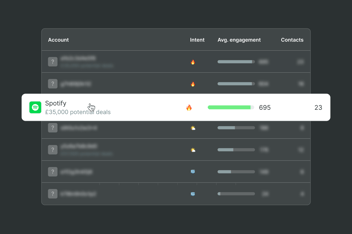
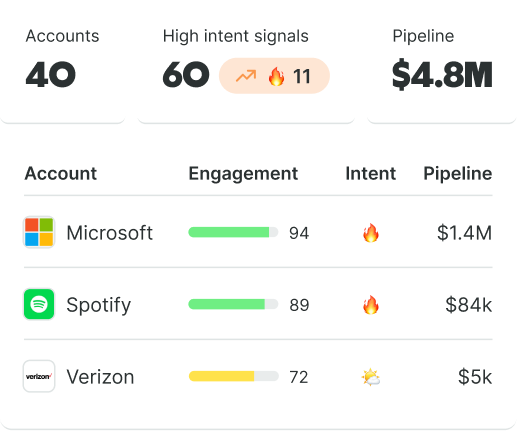
On login, Account Reveal data populates a live feed of companies engaging with your content, each rated Hot, Warm, or Cold based on real intent signals. The intelligence is there when you arrive - before you've opened a single report or navigated anywhere.
What that looks like in practice:
- A Head of Marketing opens Turtl before a board call and sees which enterprise accounts engaged with this week's campaign and how warm they are. The conversation starts with real data, not a prepared slide.
- A Marketing Manager flags three Hot accounts (marketing qualified accounts, or MQAs) to Sales before Monday's pipeline call. The list came from the homepage, not a report request.
- A Sales Manager is able to prioritize by account stage and buying group engagement.
CRM integration sits front and center on the same screen. Connecting HubSpot, Salesforce, Demandbase, or 6sense is a homepage action, not a Settings configuration buried three menus deep. Once connected, intent signals map directly to pipeline, so the handoff from marketing intelligence to sales action is immediate.
Intelligence at login becomes part of how teams work
When B2B buyer intent data is visible at login, it becomes part of how teams start their day. Gone are the days of requesting reports, dashboards buried deep, or having to wait for a brief on a weekly basis.
That changes the commercial conversation in a real way, allowing marketing teams to walk into pipeline calls with account-level signals beyond just surface-level metrics like clicks and views. Sales teams are able to prioritize based on what's actually happening. Meanwhile, customer success teams spot engagement changes before they become renewal risks, acting proactively and not reactively to changes.
The data has always existed, what is changing is the ability to act on it – so you’ll never feel like intent signals aren’t converting again.
Why ABM requires account-level intelligence
For most of its history, B2B content marketing has been measured in outputs: how much was produced, how many people viewed it, how long they stayed on the page. These are just vanity metrics. The commercial questions that need to be answered are which companies are engaging, how deeply, and what that signals about where they are in a buying process - all of which was tracked separately, in a different tool, reviewed at a different cadence.
Account-based marketing made that gap impossible to ignore. If your go-to-market motion is account-level, you need account-level signals in real time, accessible to the people who act on them. The Turtl homepage is where that happens.
We’re just getting started
This is just the start of something bigger. The question driving the next phase of Turtl's product direction is: what happens when content intelligence stops being something you look up, and becomes something that acts?
The path from here runs toward content generates a continuous signal about which accounts are in market, which messages are resonating, and what the next move should be as a live layer of intelligence that surfaces the right action, to the right person, at the right moment.
That means AI (like Hatch) can be used to recommend what to do next based on what it sees. It means intent signals that trigger workflows. It means a platform where the gap between a content engagement event and a sales conversation closes from days to minutes.
Turtl’s new homepage puts revenue intelligence front and center at login. What comes next makes it ambient – woven into every workflow, every content decision, every commercial conversation. This is just the beginning of a true AI-first Revenue Content Platform.
The next time you log into Turtl, you'll see where it starts.
Frequently Asked Questions
What is account intelligence in B2B marketing?
Account intelligence is behavioral data that tells you which companies are engaging with your content, how deeply, and what that engagement signals about their buying intent. It goes beyond contact-level metrics to show account-level patterns: which buying group members are active, how often they return, and how their engagement compares to accounts that have previously converted.
How do intent signals help ABM teams prioritize accounts?
Intent signals tell you which accounts are actively researching solutions like yours right now. For ABM teams, this lets you prioritize outreach toward accounts showing buying behavior rather than working a static list. Hot accounts showing repeat, deep engagement convert at significantly higher rates than cold accounts, so acting on intent signals at the right moment is the core workflow advantage.
What is the difference between hot, warm, and cold accounts in ABM?
Hot accounts show high-frequency, deep engagement with your content across multiple touchpoints, often involving multiple buying group members. Warm accounts are actively engaging but at lower frequency or depth. Cold accounts have visited but show minimal signal. Scoring accounts across these tiers lets marketing and sales align on where to focus effort and what kind of outreach is appropriate.
How does account reveal data integrate with CRM and ABM platforms?
Account reveal data maps anonymous content engagement back to named companies using IP resolution and third-party data. When integrated with CRM platforms like HubSpot and Salesforce, or ABM platforms like Demandbase and 6sense, it connects content engagement signals directly to pipeline records, so intent data surfaces inside the tools sales and marketing already use.
Why do ABM teams need content analytics beyond views and clicks?
Views and clicks tell you how many people engaged. Account intelligence tells you which companies engaged, how deeply, and what that means for pipeline. For ABM, the relevant metric is not total engagement volume but account-level signal: which specific accounts are showing buying behavior, and are they accounts you are actively targeting. Without account-level attribution, content analytics cannot inform pipeline decisions.