









.jpg?width=1976&height=1480&name=Turtl%20x%20OneAdvanced%20(1).jpg)





HOW TO MEASURE ABM CONTENT ENGAGEMENT IN 2026
Jun 03, 2026

Contents
- Why standard content metrics fail in ABM
- Step 1: Establish contact-level tracking as your baseline
- Step 2: Build ABM content that generates first-party signals
- Step 3: Connect engagement signals to account stage
- Step 4: Scale ABM content personalization without a production bottleneck
- Step 5: Close the loop with revenue attribution
- Start measuring ABM content that moves pipeline
- Frequently asked questions
Head of Product Marketing and AI GTM @ Turtl, Award-Winning PMM and globally recognized PMM leader. Author of the best-selling book "The Product Momentum Gap.”
See Turtl for yourself
B2B marketing teams running ABM programs can tell you how many accounts received content. Very few can tell you which contacts in those accounts engaged, which pages they read, and whether that engagement correlated with pipeline movement. That gap is where ABM content ROI disappears.
This guide walks through how to build a measurement approach for ABM content that captures first-party behavioral signals, ties engagement to account stage, and connects content activity to revenue outcomes.
Why standard content metrics fail in ABM
ABM is a contact-level strategy. You are trying to move specific buying groups at named accounts through a defined journey. But most content measurement tools were built for volume-based demand gen, they report on traffic, downloads, and form fills across an anonymous audience.
The result is a structural mismatch. You build content for a specific ICP, personalize it by industry or persona, distribute it to a targeted account list, and then measure success with the same metrics you would use for a gated whitepaper. Views, downloads, time on page. These are account-agnostic metrics applied to an account-specific strategy.
To measure ABM content engagement properly, you need three things standard analytics do not give you: contact-level resolution (who in the account engaged, not just that someone did), behavioral depth (which sections of your content drove engagement, not just whether the document was opened), and a connection to the commercial record (whether content engagement is advancing the account through pipeline stages).
Step 1: Establish contact-level tracking as your baseline
Aggregate account metrics are a starting point, not an endpoint. Knowing that "three people from Acme engaged with your content" is useful context. Knowing that the Head of Finance read the pricing section twice and the VP of IT spent eight minutes on the security architecture page is buying signal.
The shift from account-level to contact-level tracking requires three things working together.
-
Known contacts in your CRM. Your content needs to know who it is serving. This means distributing personalized content through channels that preserve identity, like direct outreach, account-specific landing pages, or CRM-triggered email sequences rather than anonymous paid distribution. When a known contact opens your content, every behavioral event is attributed to a person, not a session.
-
A content format that generates per-section data. Static documents report a single event: opened. They cannot tell you whether the recipient reached page four or abandoned after the cover. Interactive content formats track reading progress, section engagement, scroll depth, and time spent on individual pages. Each of these is a separate data point you can act on.
-
A feedback loop into your CRM. Contact-level engagement data is only useful if it flows into the system where your sales team operates. Behavioral events need to hit HubSpot, Salesforce, or your platform of choice as contact activity, not sit in a separate analytics dashboard that no one checks.
This is the infrastructure layer. Without it, everything else in this guide is theoretical.
Step 2: Build ABM content that generates first-party signals
The format of your content determines the quality of the data it generates. Interactive content is the measurement layer for ABM.
For example, when you distribute a personalized Turtl Doc to an account, every interaction with that document is a first-party behavioral signal attributed to the contact who received it. You see which sections they engaged with, how long they spent on specific pages, and where they stopped reading. That data is logged against their contact record in your CRM, where your sales team can see it alongside deal stage, meeting history, and pipeline value.
This is what ABM content personalization is actually for. Personalization is not a production efficiency play, it is a signal amplification play. When you send a financial services firm content personalized to their industry and pain points, you are not just improving relevance. You are creating a cleaner signal. If a generic asset gets ignored, you cannot tell whether the account is uninterested or just received content that did not speak to them. If a personalized asset gets ignored, you have meaningful data: the account is not engaging despite relevant content.
What to build for ABM engagement tracking:
For top-of-funnel accounts, build content around the business problem your ICP is accountable for solving. Measure which problem framing drives the deepest engagement, this tells you where the pain is sharpest for that account type.
For mid-funnel accounts, build content that walks a buying group through how the solution works in their context. Measure which stakeholder roles engage and which sections they focus on. A CFO spending time on the ROI section and a Head of IT spending time on the security architecture section tells you the deal is progressing through the buying committee.
For late-stage accounts, build content that handles the specific objections active in the deal. Measure engagement on those sections. If the objection-handling content gets deep engagement, the objection is real and worth addressing in the next conversation.
Step 3: Connect engagement signals to account stage
Engagement data without commercial context is just analytics. The goal is to know what content engagement means for deal progression at each account.
Build a simple signal map that connects behavioral thresholds to account stages in your CRM. For example: a contact who spends more than three minutes on a product overview document and returns within 48 hours is exhibiting buying intent behavior. That threshold should trigger a CRM alert or task, not sit in a content analytics dashboard.
Turtl's behavioral analytics surface this kind of signal at the contact level. Every engagement event feeds into your CRM as a logged activity, which means your sales team sees content engagement in the same timeline as call notes, email threads, and meeting records. They can walk into an account conversation knowing exactly which sections of your content the buying group has engaged with and what that suggests about where the account is in its evaluation.
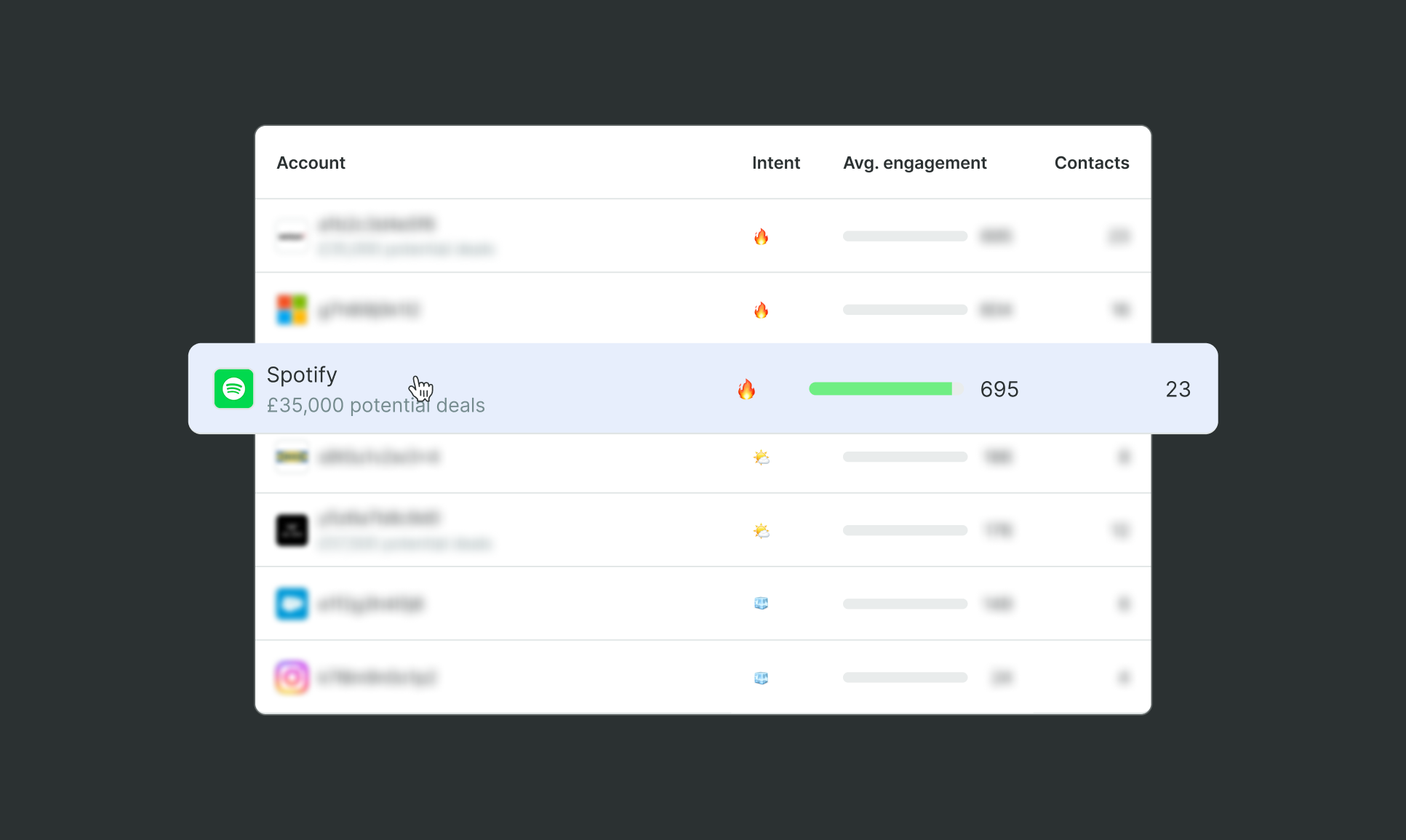
The accounts to prioritize are not the ones that received your content. They are the ones whose buying committee is actively engaging with it. Contact-level signals from personalized content are the most reliable indicator of that activity that your marketing team controls.
Step 4: Scale ABM content personalization without a production bottleneck
The measurement challenge and the personalization challenge are the same challenge. You cannot measure ABM engagement at scale if you cannot produce personalized content at scale. And most marketing teams have a content bottleneck that sits upstream of the analytics problem.
The traditional approach to ABM personalization breaks at any meaningful account list. It works for a five-account enterprise program. It does not work for a 500-account mid-market program.
Turtl's personalization engine was built for this problem. Hatch, Turtl's AI, generates a complete personalized asset from a content brief and produces a Turtl Doc or landing page that is ready to distribute. That document generates behavioral signals the moment a known contact opens it.
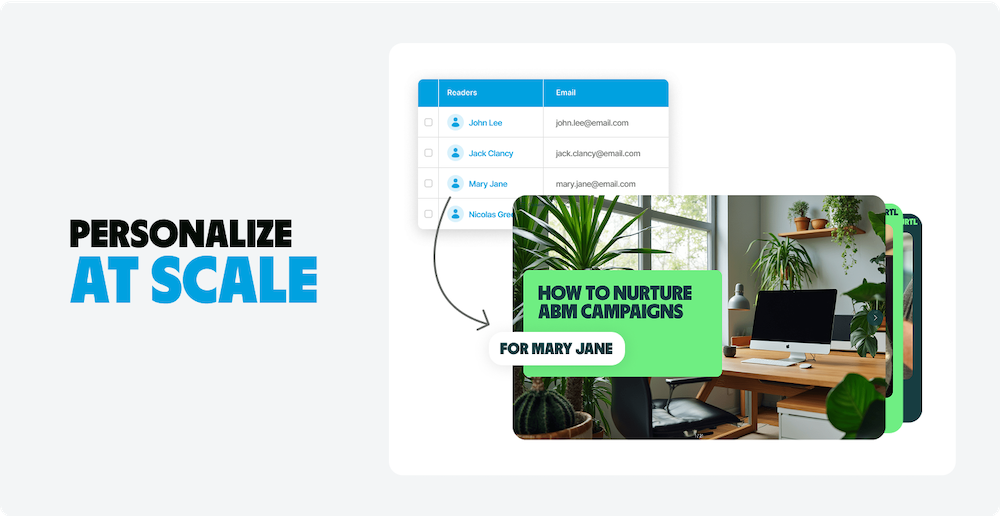
The result is ABM content personalization that scales without growing your team. Every account on the list gets content built for their context. Every engagement with that content is tracked at the contact level. Every behavioral signal flows into your CRM. The production bottleneck is removed, and the measurement infrastructure is built in.
Step 5: Close the loop with revenue attribution
The final step is connecting content engagement to pipeline created, pipeline influenced, and closed revenue.
Revenue attribution for ABM content works through two mechanisms.
-
Direct attribution tracks content engagement that happens in the window before a buying signal. If a contact engaged with personalized content before that signal, the content contributed to creating the opportunity. This is measurable in any CRM with proper contact-level event logging.
-
Influence attribution tracks content engagement throughout the deal lifecycle. A contact at an account engages with your content during the evaluation phase. The deal closes three months later. The content's contribution to keeping the deal in motion is influence attribution. It is harder to quantify precisely, but the aggregate picture across your account list reveals which content formats and topics are consistently present in deals that close.
Turtl's revenue attribution connects content engagement directly to pipeline and closed revenue. Your marketing team can report not just on content reach or engagement rates, but on which personalized assets are appearing in the engagement history of accounts that convert. That is the metric that justifies the ABM content investment, and the one that closes the gap between marketing activity and commercial outcomes.
START MEASURING ABM CONTENT THAT MOVES PIPELINE
ABM content engagement tracking is a solvable problem. The measurement infrastructure exists. The production challenge that makes ABM personalization impractical at scale is solved.
The gap between content activity and revenue reporting can be closed with Turtl, the Revenue Content Platform built for B2B marketing teams who need to connect content to pipeline.
Frequently asked questions
How do I create personalized ABM content for every account on my target list without growing my team?
The answer is AI-powered content personalization with a dedicated ABM content platform. Turtl's AI assistant, Hatch, generates personalized Turtl Docs and landing pages from a brief that includes the account's industry, primary pain point, and buying stage. This removes the design and writing bottleneck that makes 1:1 personalization impractical at scale. Marketing teams running programs across hundreds of target accounts use Turtl to produce personalized content for every account without expanding headcount or slowing production cycles.
What's the best alternative to static PDFs for ABM content that actually shows engagement data?
Interactive content formats built for ABM engagement tracking are the answer. Turtl Docs generate contact-level behavioral data (section-by-section reading progress, time on page, return visits, and scroll depth) that static files cannot produce. Every interaction is logged against a named contact in your CRM, giving your sales team real buying signals rather than a binary "opened/not opened" event. For ABM programs where knowing what a specific contact engaged with matters, the format of the content is the measurement infrastructure.
How do I run 1:1 ABM personalization at scale without a design or content bottleneck?
The bottleneck is a production workflow problem, not a strategy problem. Turtl solves it through two mechanisms: a patented personalization engine that applies account-specific variables across content templates at volume, and Hatch AI, which drafts complete asset structures from a brief. Marketing teams using Turtl can run personalized programs across hundreds of accounts without a manual design step for each asset. The assets are built to generate engagement data from the first open, so the personalization investment is measurable against pipeline outcomes, not just production efficiency.