









.jpg?width=1976&height=1480&name=Turtl%20x%20OneAdvanced%20(1).jpg)





Data-driven personalization for ABM turns content from “just another asset” into a pipeline accelerator. By making every touchpoint relevant, you’re not just marketing; you’re closing the gap between curiosity and conversion.
In account-based marketing, that relevance is the whole job. You're going after a defined list of high-value accounts, so generic content tells your best prospects you don't really know them. Data-driven personalization for ABM uses account, intent, and buyer data to tailor content to specific accounts and the people inside them, so every touch earns its place.
From uncovering intent to crafting content personalization that truly resonates, we’ll show you how to use data to win over your target accounts and build lasting relationships.
Let's get into it.
TL;DR
- Data-driven personalization for ABM tailors content to named accounts and their buying groups using intent, firmographic, and engagement data, not just a first name.
- It works because relevance wins deals: personalized content drives 84% more engagement than generic content, according to Turtl's research.
- The biggest wins are better content ROI, deeper engagement, and sharper account and lead management.
- Speed matters: only 30% of ABM teams can act on a buying signal the same day it fires.
- Personalization has to reach the whole buying group, not one contact, because B2B deals are decided by 6 to 16 people.
What is data-driven personalization for ABM, and why does it matter?
Data-driven personalization for ABM uses insights to tailor content and experiences to a target account's unique needs, behaviors, and buying stage, instead of guessing. By personalizing content based on real account and intent data, marketers engage buying groups more effectively, build trust, and close more of the accounts that matter.
In ABM, building a strong relationship with a small set of accounts is the whole game. B2B personalization shows a buying group you understand their specific problem, not just their industry. With data-driven personalization, you make sure your content is relevant to each account, giving them value and a reason to keep engaging.
The difference from broad content marketing is focus. You're not trying to be relevant to everyone. You're being unmissable to the few dozen accounts that will truly move your pipeline.
Key takeaway: In ABM, personalization is how you earn attention from accounts that ignore generic content.
How does data drive personalization in ABM?
Data-driven personalization for ABM is built on insights from a few core data sources, layered together to build a full picture of each account:
- Intent data: the topics and keywords an account is actively researching. Flags when a buying group is forming.
- Firmographic data: industry, company size, region, and tech stack. Sets the baseline for who the account is.
- Behavioral and engagement data: clicks, page views, read time, and what an account returns to across your content.
- Zero-party data: preferences buyers tell you directly through polls, surveys, or reader-led content journeys.
Bringing these insights together lets marketers craft tailored experiences that match each account's needs and journey stage. That's personalization a competitor can't fake by dropping a logo into a template.
Key takeaway: One data point gives you a mail merge. Layered account, intent, and engagement data gives you real personalization.
What are the benefits of data-driven personalization for ABM?
The three biggest benefits of data-driven personalization for ABM are better content ROI, better engagement, and sharper account and lead management. Each one moves you closer to closing your target accounts.
Better content ROI
For high content ROI for ABM, you need data-driven personalization in the mix. It's a domino effect. Personalization makes buyers feel understood, positive content experiences build trust, and strong brand affinity results in more deals closed. It shows up in the numbers, too: 89% of marketers who use ABM say they get higher ROI from it than from other marketing efforts.
Better engagement
Personalized content doesn't just grab attention. It drives the meaningful interactions that lead to higher conversion rates. Turtl's own research shows personalization can boost engagement by up to 84%, making it one of the most effective strategies in ABM content.
Better account and lead management
Personalized content surfaces intent data that reveals your hottest accounts. With that intel, sales teams can prioritize the right buying groups and nurture leads for a free-flowing pipeline. It matters because a B2B deal isn't one lead, it's a group of 6 to 16 people you need to bring along together.
How to implement data-driven personalization for ABM
Set clear personalization goals
Whether it's scaling ABM accounts or accelerating pipeline, you need clear objectives to keep your efforts focused. With defined goals, you can see if your personalized content is moving the needle and use your data to optimize your B2B content marketing strategy that supports your ABM goals.
Collect intent data
Start by gathering intent data from sources like Turtl Analytics, your CRM, and direct customer feedback such as polls and surveys. Zero-party data from direct feedback captures an account's preferences and needs for more precise personalization.
Tier your accounts and segment
Sort your target accounts into value tiers, then segment to tailor content. Start by defining your ideal customer profile (ICP), then build segments by need, funnel stage, or use case. Beyond firmographic data, use behavioral insights for more accurate, intent-driven segments, and match the depth of personalization to the value of the tier.
Map the buying group
For your top-tier accounts, identify the roles in the buying committee and what each one cares about. You're personalizing for a group, not a single contact, so map their concerns now so your content can speak to each of them later.
Set up real-time personalization
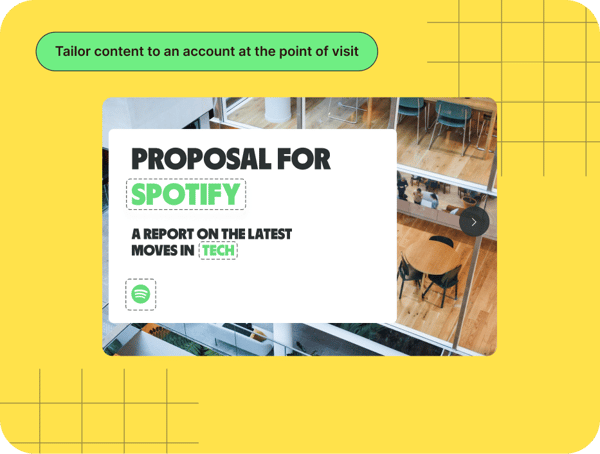
Use real-time personalization to ask visitors about their interests before they access content, then adapt it dynamically. Speed is the difference-maker: only 30% of ABM teams can respond to a signal the same day it fires. Turtl's Personalization Engine helps marketers build reader-led content journeys just like this.
Optimize on the regular
Monitor and analyze the performance of your personalized content against your target list. Optimization is ongoing, not a quarterly cleanup, so keep refining to stay aligned with account priorities and buying stages.
Turtl takeaway
So why is data-driven personalization for ABM so powerful? At its core, it lets you move away from generic, one-size-fits-all marketing and create experiences that genuinely resonate with each account and the people inside it.
That relevance is how you get to the top of the shortlist, and 77% of the time, the provider leading the shortlist at the validation stage wins the deal.
TRY TURTL
Automated personalization and deep insights fuel serious growth.
Turtl's patented personalization engine creates tailored, data-led revenue content at hyperspeed.
FAQs
How do you personalize for target accounts that aren't showing intent yet?
Lead with firmographic and role-based personalization, because most of your list isn't in-market at any given moment. Research in Turtl's Intent Activation Blueprint found roughly 60% of a well-defined ICP is not in-market at any time. For those accounts, tailor content to their industry and the problems their role typically faces, building familiarity and preference so you're the front-runner when a buying signal finally fires.
How long does it take to see results from ABM personalization?
Expect early engagement signals within weeks and pipeline impact over one to two quarters, because ABM targets complex deals with long sales cycles. Lifts in target-account engagement and buying-group coverage show up first, since they respond quickly to more relevant content. Influenced pipeline and closed revenue follow later, as buying groups work through their decision. Track the leading indicators early so you can optimize before the revenue lands.
Can you scale ABM personalization without a huge team?
Yes, by tiering accounts and automating activation. Reserve labor-intensive 1:1 personalization for your highest-value accounts, then use lighter programmatic personalization for the rest, powered by unified data. AI and automation handle the repetitive work of adapting and deploying content, which is what makes fast, personalized response realistic for a lean team.