






By the time a buyer fills in a form or surfaces in your intent platform, most of your funnel has already seen generic content. Turtl gives revenue teams four personalization methods that cover every motion and scale, so relevance reaches accounts whether you have a full contact list, an ABM segment, or an anonymous visitor clicking through a campaign.

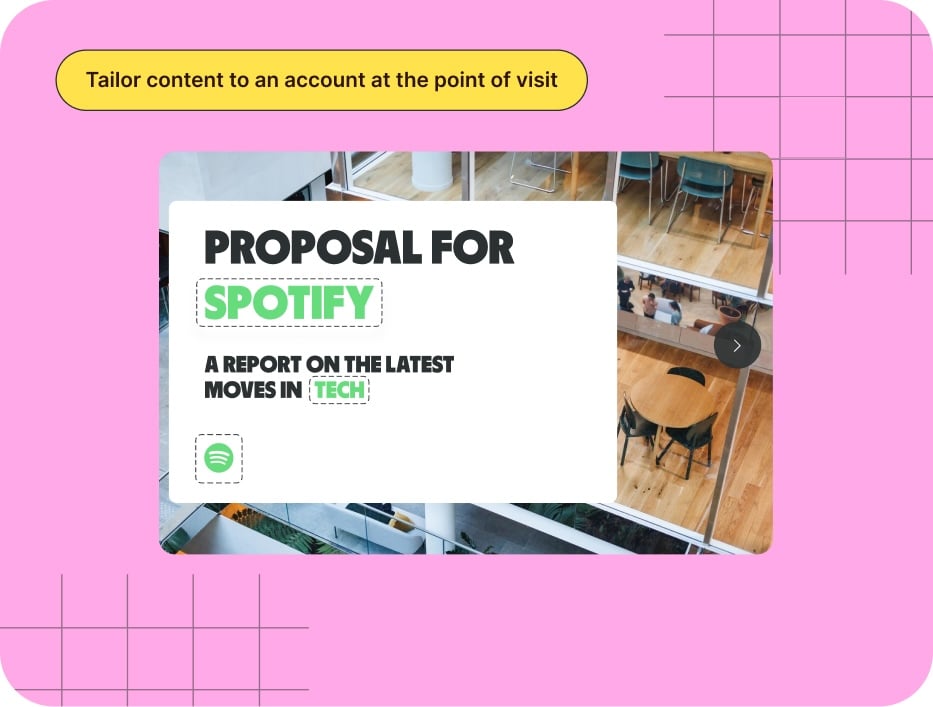
Build a personalized version on demand in Turtl for a specific person, account, or meeting. Ideal for proposals, executive briefings, and key account outreach where a generic document could cost you the deal.
Upload a CSV or connect your 6sense segment and Turtl generates up to 25,000 personalized assets in a single run, each with its own URL and shareable cover asset. Load them directly into your MAP or CRM and run your full ABM campaign from one base asset.
Publish content that adapts in real time based on what the reader selects when they arrive, capturing audience preference data without requiring a form fill. Best for demand gen and interactive campaigns where self-segmentation and engagement signals matter.
Dynamic personalization is compatible with intent providers your team already trusts, including:
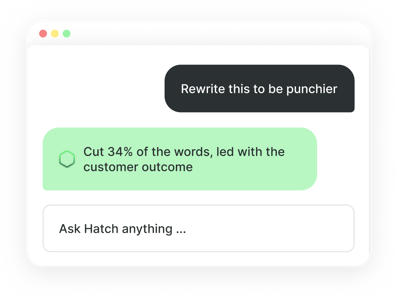
Turtl personalizes content at scale through its patented Personalization Engine and Hatch AI, which allow marketers to create thousands of tailored versions of a document in minutes.
Personalization Engine: Uses tokens and rules to automatically adjust messaging, imagery, and narratives based on account, job title, or industry data.
Dynamic Personalization: Leverages account-level intent data (via 6sense or Demandbase) to tailor content in real-time for visitors, even if they remain anonymous.
CRM Integration: Syncs with your existing data to trigger personalized content journeys throughout the buyer lifecycle.
Turtl personalizes content at scale through its patented Personalization Engine and Hatch AI, which allow marketers to create thousands of tailored versions of a document in minutes.
Personalization Engine: Uses tokens and rules to automatically adjust messaging, imagery, and narratives based on account, job title, or industry data.
Dynamic Personalization: Leverages account-level intent data (via 6sense or Demandbase) to tailor content in real-time for visitors, even if they remain anonymous.
CRM Integration: Syncs with your existing data to trigger personalized content journeys throughout the buyer lifecycle.
Turtl offers several personalization methods, each suited to a different motion.
Manual (self-service, via an internal form): built for 1:1 sales outreach and executive engagement.
Example: a personalized sales asset showing a prospect's company name, logo, and sector-specific case studies.
Batch (via file upload): built for ABM campaigns, newsletters, and event follow-up.
Example: thousands of personalized whitepapers, each with the prospect's name on the cover and industry-relevant content inside.
Public/Reader (via an audience form): built for demand gen and interactive campaigns where readers self-segment.
Example: a product brochure where prospects select their preferences and get matched content plus their nearest contact.
Dynamic (automated, via CRM signal, 6sense/Demandbase intent data, or API): built for always-on ABM and demand gen.
Example: a CRM engagement signal triggers a personalized document with relevant case studies, or a form submission triggers an API call that emails a tailored digital brochure.
Turtl offers several personalization methods, each suited to a different motion.
Manual (self-service, via an internal form): built for 1:1 sales outreach and executive engagement.
Example: a personalized sales asset showing a prospect's company name, logo, and sector-specific case studies.
Batch (via file upload): built for ABM campaigns, newsletters, and event follow-up.
Example: thousands of personalized whitepapers, each with the prospect's name on the cover and industry-relevant content inside.
Public/Reader (via an audience form): built for demand gen and interactive campaigns where readers self-segment.
Example: a product brochure where prospects select their preferences and get matched content plus their nearest contact.
Dynamic (automated, via CRM signal, 6sense/Demandbase intent data, or API): built for always-on ABM and demand gen.
Example: a CRM engagement signal triggers a personalized document with relevant case studies, or a form submission triggers an API call that emails a tailored digital brochure.
You can leverage firmographic data, CRM insights, behavioral signals, and uploaded account lists to create hyper-targeted content experiences. You can then use this data to personalize text, images, call-to-action buttons, charts, and even entire content flows. This ensures that every reader gets the most relevant and engaging experience.
When someone opens your Turtl content, we identify their account via reverse IP lookup using 6sense or Demandbase. Turtl then applies personalization rules based on that account's data (industry, revenue, buying stage) before the page finishes loading. If a visitor declines cookies, Turtl falls back to server-side identification. If the account still can't be resolved, the visitor sees your default content, the baseline version you set in the personalization form.
Most personalization tools work at the targeting layer, controlling who sees a campaign, or offer basic token swaps like inserting a name or logo into a template. Turtl personalizes the full content experience, structure, messaging, and calls to action, across four methods covering manual, batch, public, and always-on dynamic use cases. Every version is tracked back to pipeline through native integrations with Salesforce and HubSpot, so personalization effort connects directly to revenue attribution.
Unlike static, rule-based personalization, Turtl offers real-time AI-driven personalization that dynamically adapts to user behavior.
Most personalization tools work at the targeting layer, controlling who sees a campaign, or offer basic token swaps like inserting a name or logo into a template. Turtl personalizes the full content experience, structure, messaging, and calls to action, across four methods covering manual, batch, public, and always-on dynamic use cases. Every version is tracked back to pipeline through native integrations with Salesforce and HubSpot, so personalization effort connects directly to revenue attribution.
Unlike static, rule-based personalization, Turtl offers real-time AI-driven personalization that dynamically adapts to user behavior.
When content gets personal, it stops being background noise and starts pulling its weight. With the right data, you’re not just publishing, you’re connecting, nudging, and converting. From signal to story to sale, we’ll show you how personalization turns curiosity into action.
Kantar Worldpanel grew marketing-led revenue by 550% with psychology-led content.
B2B personalization is critical in marketing because buyers expect relevant, tailored experiences that address their specific industry challenges and buying stages. In an ABM program, it runs at three levels, our guide explores all three, and how to use them to move the right account to the next stage of the deal.